


 Friendys
 United Ukraine
 Bidfax
 Payments
 GenAp group chat
 Adsline MarketPlace
Leasing Versus Buying Electric Vehicles Costs
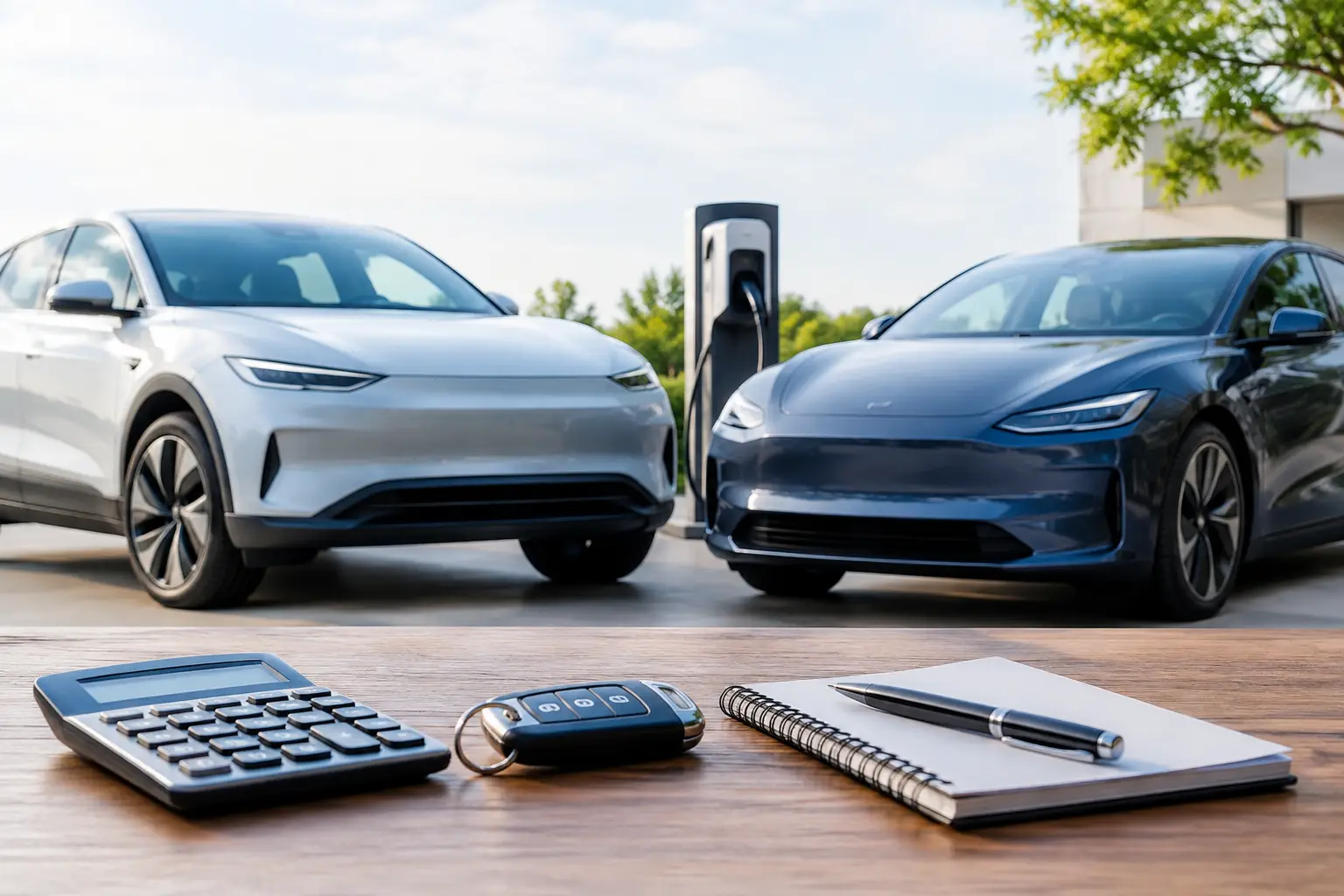
A low monthly payment can make an EV lease look like the obvious deal. A large federal tax credit can make buying look equally compelling. But leasing versus buying electric vehicles is less about picking the lowest number in an ad and more about matching the vehicle, mileage, charging access, and ownership timeline to your real driving life.
An EV can be a smart daily driver, a commuter car, a family hauler, or a work vehicle. Before you compare payments, look at the listing details that affect your costs after delivery: battery warranty, estimated range, charging port, drivetrain, tire condition, accident history, title status, included charging equipment, and whether the vehicle qualifies for any available incentives.
Leasing Versus Buying Electric Vehicles: Start With Your Timeline
Leasing works best when you want a newer EV for a defined period, usually two or three years, and you prefer predictable payments over long-term ownership. You return the vehicle at lease end unless you choose to buy it. That can be attractive when charging standards, battery technology, range, and model availability are changing quickly.
Buying makes more sense when you plan to keep the EV after the loan is paid off, want unlimited flexibility to sell or trade, or drive more miles than a standard lease allows. You also control the vehicle. Add a home charger, change tires, sell it privately, or keep it for another decade without asking a leasing company.
The key question is simple: Will this EV still fit your needs three, five, or eight years from now? A buyer who expects to keep a vehicle for seven years usually has a different answer than a driver who wants the latest safety tech every 36 months.
When leasing has the edge
A lease can be a strong fit for drivers whose commute is stable and whose annual mileage is comfortably below the contract limit. Common limits are 10,000, 12,000, or 15,000 miles per year. If your household has a second vehicle for road trips, hauling, or business use, a leased EV may stay within those limits easily.
Leasing may also provide a cleaner path to certain EV tax-credit savings. In some transactions, the leasing company claims the commercial clean-vehicle credit and may pass part or all of that value to the customer through a lower capitalized cost or lease incentive. This can matter for shoppers whose income or vehicle-price limits prevent them from qualifying for a consumer purchase credit. It is not automatic, so ask for the lease worksheet and see exactly where the incentive appears.
You are also less exposed to resale uncertainty. EV values can move quickly as manufacturers adjust pricing, new models arrive with more range, or incentives change. At lease end, the lender takes that residual-value risk, not you.
When buying has the edge
Buying usually rewards patience. Your payment may be higher than a lease payment at first, but each payment builds equity. Once the loan is finished, the vehicle can continue serving as low-cost transportation without a monthly finance payment.
It is especially worth considering for shoppers who drive a lot. Excess-mileage charges can erase the appeal of a lease quickly. A delivery contractor, rideshare driver, sales rep, or family with frequent interstate trips should calculate annual miles honestly instead of using a best-case estimate.
Buying also opens the used-EV market, where price-conscious shoppers may find compelling value. A used EV can have much of its battery warranty remaining, lower depreciation ahead of it, and a purchase price that makes financing easier. But used EV listings require closer inspection. Confirm the VIN, title condition, collision disclosures, tire wear, service history, battery warranty transferability, charging cables, and any open recalls before making an offer.
Compare the Deal Sheet, Not Just the Payment
A monthly payment does not tell the full story. A lease can have a low payment because the term is short, the mileage allowance is tight, or a large amount is due at signing. A purchase payment can look high while still creating ownership value over time.
For a lease, review the selling price or capitalized cost, money factor, residual value, mileage allowance, acquisition fee, disposition fee, total due at signing, and the per-mile charge for going over the allowance. Also ask whether the advertised payment assumes a down payment, specific credit tier, or manufacturer incentive.
For a purchase, compare the out-the-door price, loan term, APR, down payment, total interest, estimated trade-in value, and whether the vehicle qualifies for a federal, state, local, utility, or manufacturer incentive. Incentive rules change, and dealer ads may refer to savings that not every buyer receives. Treat every credit as a line item to verify, not a promise.
A larger down payment on a lease deserves special caution. If the vehicle is stolen or totaled early in the term, that upfront money may not come back to you. Many shoppers prefer to keep lease drive-off costs modest and preserve cash for charging installation, insurance, or an emergency fund.
Charging Can Change the Math
An EV that is inexpensive to lease or buy can become inconvenient if you cannot charge where you live or work. Apartment residents, condo owners, and renters should identify nearby reliable charging before signing. Check pricing by time of day, access hours, parking rules, and whether fast chargers are routinely available when you need them.
Home charging shifts the ownership equation. If you have a garage or dedicated parking space, a Level 2 setup can make an EV far easier to live with and can reduce fuel costs compared with public charging. Get quotes for equipment and electrical work before deciding. A panel upgrade, long wiring run, or landlord approval can add meaningful cost.
For road-trip drivers, compare the vehicle's charging curve and network access, not only its advertised range. Two EVs with similar range figures can feel very different on a 500-mile trip if one charges consistently faster or has easier access to dependable stations. If you are leasing, consider whether the car's charging setup will still work for your routes throughout the term.
Battery Health, Warranty, and Condition Matter Most on Used EVs
Battery degradation is real, but it is not a reason to rule out every used EV. Most modern EV batteries are designed for long service, and federal requirements generally provide battery coverage for at least eight years or 100,000 miles. Terms vary by manufacturer, model year, and state, so read the actual warranty documents.
Ask a seller or dealer for the vehicle's current odometer reading, remaining battery and powertrain warranty, charging history if available, service records, and any diagnostic report they can provide. A clean title does not replace an inspection, and a rebuilt or salvage title deserves even more scrutiny. Prior collision damage can affect high-voltage components, battery housing, sensors, alignment, and insurability.
Do not assume every EV qualifies for the same insurance rate either. Obtain a quote on the exact VIN before committing. Repair costs, parts availability, driver history, location, and vehicle value can make premiums vary more than shoppers expect.
A Practical Way to Decide
If you expect stable low-to-moderate mileage, want new technology, and do not want to guess what the EV will be worth later, lease quotes deserve a serious look. If you want maximum flexibility, drive high annual miles, or plan to hold the vehicle long after financing ends, buying is usually the stronger long-term play.
There is a middle path for shoppers who want value without committing to a brand-new vehicle: buy a well-documented used EV with remaining warranty coverage. Search listings with the same discipline you would use for any major vehicle purchase. Compare trim level, range, charging equipment, title history, condition disclosures, mileage, and seller terms side by side. On a marketplace such as AutoDeal, direct questions and transparent listing details can help separate a real value from a payment-focused pitch.
The right EV deal should leave room in your budget for insurance, charging, tires, and the life changes that happen after you take the keys. Pick the option that makes the next few years easier to drive, not just easier to advertise.
 Dutch
Dutch
 English
 French
 Spanish
 Portuguese
 Deutsch
 Turkish
 Italiano
 Russian
 Romaian
 Portuguese (Brazil)
 Greek
Greek
