


 Friendys
 United Ukraine
 Bidfax
 Оплаты
 GenAp group chat
 Adsline MarketPlace
How to Inspect a Rebuilt Title Car Before Buying
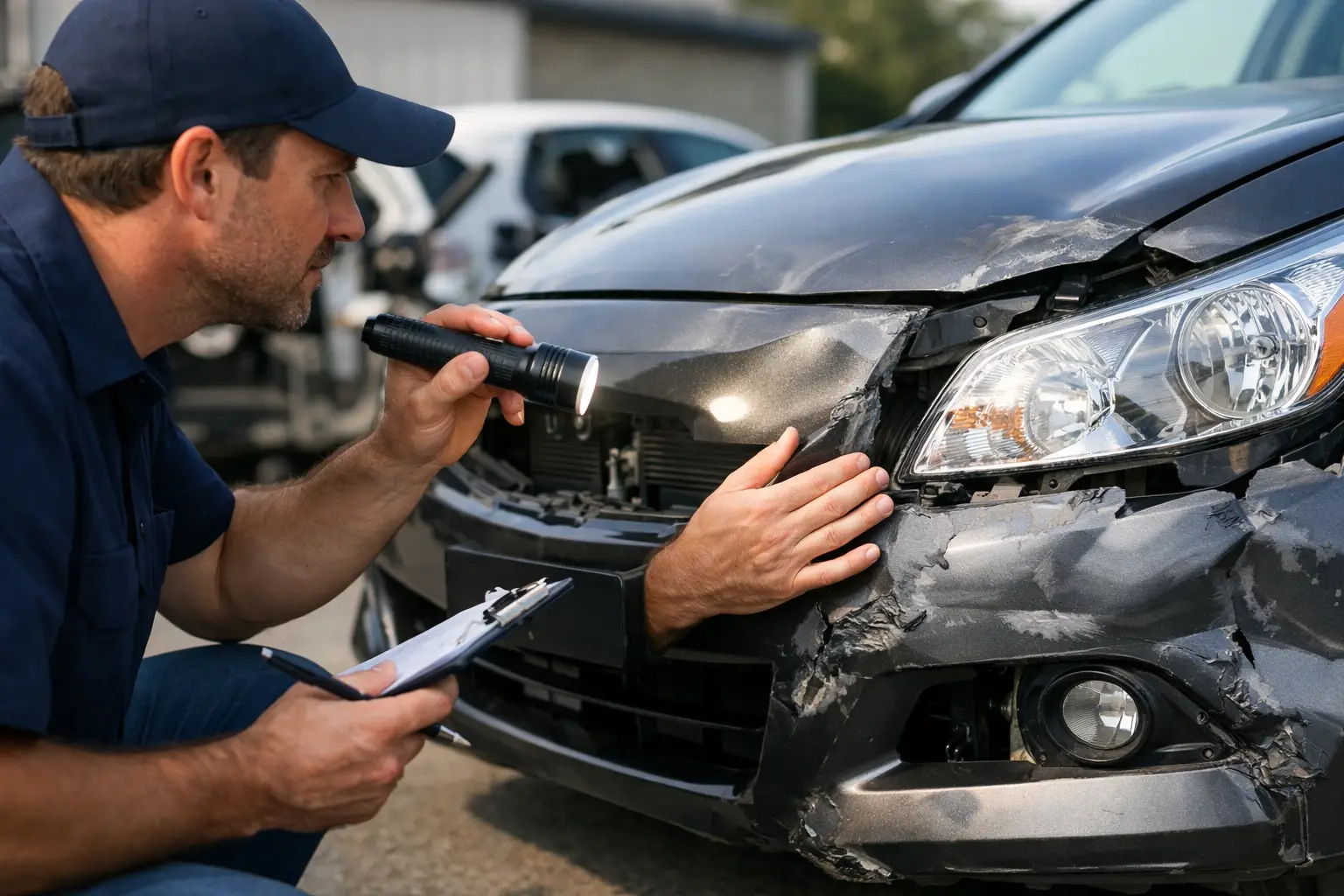
A rebuilt-title vehicle can look like a smart buy on the listing screen: newer model, good equipment, lower price. But knowing how to inspect a rebuilt title car is what separates a usable deal from a vehicle that keeps costing you after the sale. The badge on the title does not tell you whether the repair was careful, cosmetic, incomplete, or hiding a safety problem.
A rebuilt title generally means the vehicle was previously declared a total loss, then repaired, inspected under state rules, and returned to the road. That process can produce a solid daily driver. It can also return a poorly repaired vehicle to the market with a fresh detail job and limited documentation. Treat the inspection as a fact-finding process, not a quick walk-around.
Start With the VIN, Title, and Repair Story
Before meeting the seller, ask for the VIN, a clear photo of the current title, the mileage, and a direct explanation of why the vehicle was branded. A seller who knows the vehicle should be able to describe the original damage area, who repaired it, and what major parts were replaced.
Compare the VIN on the dashboard, driver-door label, title, and listing. They must match exactly. A mismatch is a stop sign until it is fully explained through proper documentation. Also confirm the title is actually rebuilt, reconstructed, or a similar road-legal state designation - not salvage. A salvage vehicle may not be eligible for normal registration or use until it completes the required state process.
Request before-repair photos and itemized repair invoices. Photos are especially useful because they show the impact location before body panels, paint, and replacement parts covered the evidence. Invoices should identify meaningful work such as frame or unibody repair, suspension components, airbags, seat belts, cooling parts, headlights, radiators, wheels, and calibration work.
No photos or receipts do not automatically mean the car is bad. Some private sellers bought it after repairs and may not have the full file. Still, missing history should lower your confidence and your offer. Do not pay as though you are buying a documented, clean-title example.
How to Inspect a Rebuilt Title Car in Person
Inspect the vehicle in daylight, on dry pavement, before it has been warmed up. Bring a flashlight, a paint-thickness gauge if you have one, and a scanner capable of reading more than basic engine codes. If you are not comfortable checking structural and safety systems, schedule an independent pre-purchase inspection before money changes hands.
Start outside and work slowly around every panel. Look down the sides of the vehicle from several angles. Waves in the reflections, mismatched paint texture, overspray on trim, uneven panel gaps, and doors or hatches that need a hard push can point to repair quality issues. A repaired bumper is normal on many rebuilt cars. Misaligned body structure is a different level of concern.
Check the hood, trunk, and doors. They should open, latch, and sit evenly. Look at bolts on fenders, hood hinges, and door hinges for tool marks or chipped paint. Replaced panels are not automatically a problem, but the condition should match the seller's damage story.
Then get low. Inspect the underbody, wheel wells, suspension mounting points, subframes, and radiator support for fresh undercoating, irregular welds, kinks, heavy corrosion, or bent metal. Fresh paint underneath can be legitimate rust prevention, but it can also hide damage. Use your flashlight behind bumper covers and inside the engine bay, where rushed repairs are easier to spot.
Pay close attention to these areas:
- Tire wear should be even across all four tires. Feathering, severe inner-edge wear, or a steering wheel that sits off-center can signal alignment, suspension, or structural issues.
- Headlights, taillights, fog lights, parking sensors, cameras, and radar units should be secure and functional. Gaps around lights often reveal poor bumper or fender alignment.
- The cooling system should be dry and stable. Look for coolant residue, loose hoses, cracked plastic mounts, and signs the radiator or condenser is rubbing against other components.
- Windshield and door glass should have reasonable date codes for the vehicle's history. One replaced piece is common after a collision. Multiple replacement panels may support a larger damage event.
- The trunk floor, spare-tire well, carpeting, and lower door seals should be dry. Mud, silt, musty odor, corrosion on seat hardware, or water lines can point to flood damage.
Check Airbags, Seat Belts, and Electronics
Safety equipment deserves more scrutiny than paintwork. Turn the ignition on before starting the engine and watch the instrument cluster. The airbag warning light should illuminate briefly as part of the self-check, then go out. If it never comes on, stays on, or behaves differently from the other warning lamps, do not guess why.
Inspect steering-wheel, dashboard, seat-side, and pillar trim for inconsistent textures, loose fitment, or signs parts were replaced. Look underneath the front seats for disconnected wiring and check whether seat belts extend, retract, and latch smoothly. After a collision, airbags and pretensioners may need replacement, and some vehicles require module programming or seat-belt repairs as part of a proper restoration.
Test every feature advertised in the listing. Run the air conditioning, heat, windows, locks, mirrors, wipers, horn, infotainment system, Bluetooth, cameras, parking sensors, power seats, heated seats, and charging ports. On newer vehicles, also test adaptive cruise control, lane-assist features, blind-spot monitoring, and automatic emergency braking if equipped.
Modern cars can require recalibration after a windshield, bumper, suspension, or sensor replacement. A dashboard free of warning lights is encouraging, but it is not proof that every driver-assistance system works correctly. A professional shop can verify calibration status more reliably than a driveway inspection.
Scan It and Take a Real Test Drive
Use a scan tool, or have a shop scan the vehicle, for stored, pending, and permanent diagnostic codes. Ask whether codes were recently cleared. If the emissions monitors show “not ready,” the battery may have been disconnected or codes may have been cleared shortly before the sale. That is not a verdict by itself, but it means the car needs more driving and testing before you rely on a clean dashboard.
During the test drive, begin at low speed in a quiet area. Listen for clunks over bumps, rubbing in turns, wheel-bearing hum, brake squeal, and wind noise around doors or glass. The vehicle should track straight on a flat road, brake without pulling, and accelerate through its gears without harsh shifts or hesitation.
Take it onto a highway if possible. Watch the temperature gauge, steering stability, vibration through the wheel or seat, and the operation of cruise control. Then park and check again for fresh leaks, coolant odor, smoke, or warning lights. A short loop around the block is not enough to judge a rebuilt vehicle.
Get an Independent Inspection Before You Negotiate
A rebuilt-title inspection is one place where paying a qualified independent technician is usually worth it. Choose a shop that does collision, alignment, mechanical, and diagnostic work, or use separate specialists if the vehicle has complex electronics. The seller should be willing to allow a pre-purchase inspection. If they refuse, treat that as useful information.
Ask the technician to inspect frame and unibody measurements where applicable, suspension geometry, airbag-system codes, underbody repairs, cooling-system integrity, brake wear, tire wear, and electronic safety systems. For hybrids and EVs, add a battery-health review and a check for damage near high-voltage components. Repairs to these systems require proper procedures and specialized training.
State rebuilt-title inspections vary. Passing a state inspection usually means the vehicle met that state's requirements for returning to the road. It does not guarantee accident repairs meet the standard you would expect from a clean-title vehicle, nor does it replace an independent mechanical inspection.
Price the Risk, Not Just the Vehicle
A rebuilt title affects resale value, financing, insurance options, and the buyer pool when you sell later. Some lenders will not finance branded-title vehicles, and some insurers may limit physical-damage coverage or require additional review. Call your insurer with the VIN before you commit, especially if you need comprehensive and collision coverage.
Compare the car against similar clean-title vehicles with the same year, trim, mileage, drivetrain, and equipment. Then account for the branded title, unknown repair history, any cosmetic flaws, and the cost of work identified during inspection. There is no universal discount, because a well-documented minor theft recovery is different from a heavily damaged late-model vehicle with missing airbag records.
Keep your messages, title photos, seller disclosures, repair records, and inspection report together. On a marketplace such as AutoDeal, clear details in the listing and direct questions in chat help create a better record before you make an offer. Transparency will not erase a rebuilt title, but it can show whether the seller is dealing in facts.
The best rebuilt-title purchase is not the cheapest vehicle on the screen. It is the one with a believable repair story, verified safety systems, a clean test drive, and a price that leaves room for the risk you are choosing to take.
 Russian
 English
 French
 Spanish
 Portuguese
 Deutsch
 Turkish
 Dutch
Dutch
 Italiano
 Romaian
 Portuguese (Brazil)
 Greek
Greek
