


 Friendys
 United Ukraine
 Bidfax
 Pagamentos
 GenAp group chat
 Adsline MarketPlace
Best Pickup Truck Towing Starts With the Numbers
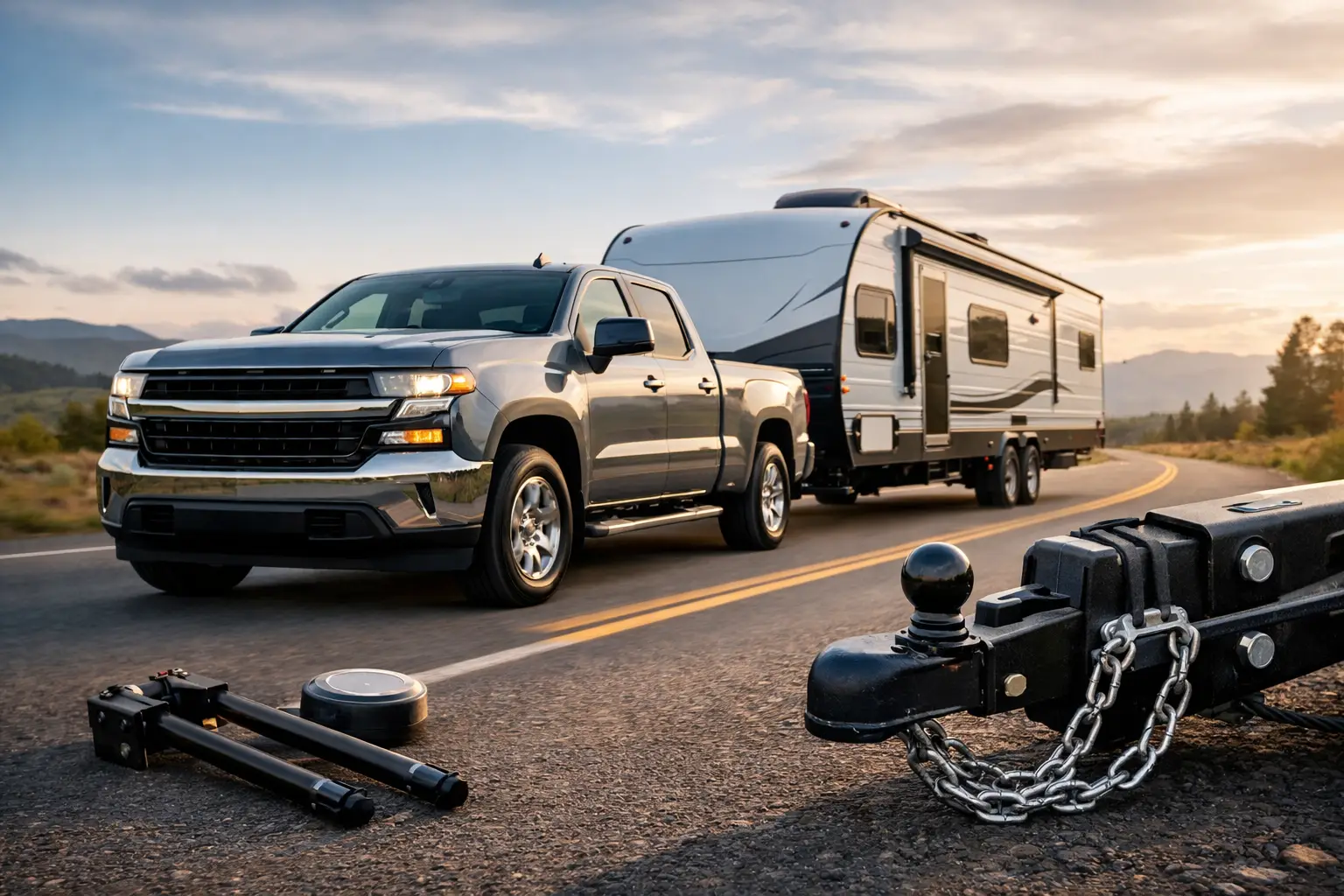
A truck can have a huge advertised tow rating and still be the wrong match for your trailer. The best pickup truck towing setup is not just about the biggest number on a badge. It is about the exact cab, bed, engine, drivetrain, axle ratio, payload sticker, hitch equipment, and condition of the truck you are actually considering.
That matters even more in the used market. Two trucks with the same year and model name can have dramatically different towing limits. Before making an offer, match the truck's real specifications to the trailer and cargo you plan to pull.
Start With Your Loaded Trailer Weight
Do not shop using a trailer's dry weight alone. Dry weight often excludes water, propane, batteries, tools, food, recovery gear, generators, and personal cargo. A travel trailer that looks manageable on paper can gain 1,000 pounds or more once it is ready for a trip.
Find the trailer's GVWR, which is its maximum loaded weight, and use that figure as your planning baseline if you expect to load it heavily. For equipment trailers, include the actual machine, attachments, fuel, straps, ramps, and anything carried in the truck bed.
A smart towing match leaves room below the truck's ratings. Running at the limit on occasional short trips is one thing. Pulling near the maximum across mountain grades, in high heat, or on long interstate runs puts more demand on the engine, transmission, brakes, tires, and cooling system.
Best Pickup Truck Towing Depends on More Than Tow Rating
Tow rating gets the headlines, but payload is often the number that ends the conversation. Payload is the amount of weight the truck can carry in and on the truck itself. That includes passengers, tools, bed cargo, a tonneau cover, aftermarket accessories, and the trailer's tongue weight.
For conventional bumper-pull trailers, tongue weight commonly lands around 10% to 15% of loaded trailer weight. A 9,000-pound loaded trailer may place 900 to 1,350 pounds on the hitch. Add two adults, a cooler, hitch hardware, and gear, and a light-duty truck can run out of payload before it reaches its advertised towing maximum.
Fifth-wheel and gooseneck trailers place even more weight in the bed. Pin weight often falls around 15% to 25% of the loaded trailer weight, depending on trailer design and loading. That is why a heavy-duty pickup may be the better tool even when a half-ton truck technically has enough tow rating.
Check these four numbers on every truck listing or seller conversation:
- Maximum trailer tow rating for that exact configuration
- Payload rating from the driver's door-jamb label
- Gross combined weight rating, or GCWR
- Rear axle weight rating, especially for fifth-wheel or gooseneck use
The door-jamb payload label is especially useful because it reflects the truck as built. A brochure rating can apply to a different cab, bed, drivetrain, tire package, or option mix.
Pick the Truck Class for the Job You Actually Do
A half-ton pickup can be an excellent tow vehicle for smaller travel trailers, utility trailers, boats, side-by-sides, and occasional equipment hauling. Models such as the Ford F-150, Chevrolet Silverado 1500, GMC Sierra 1500, Ram 1500, and Toyota Tundra come in many configurations. The right one can tow confidently, but configuration matters more than the name on the tailgate.
For frequent towing, larger enclosed trailers, heavier boats, or loaded campers, a three-quarter-ton truck usually brings more useful payload, larger brakes, heavier suspension components, and more stable control under load. Ford Super Duty, Chevrolet Silverado HD, GMC Sierra HD, and Ram Heavy Duty trucks are common options in this range.
One-ton pickups make sense when the trailer has serious pin weight, when you are pulling commercial equipment, or when you regularly travel loaded. A dual-rear-wheel truck can offer greater stability and payload for a large fifth-wheel or gooseneck, although it is wider, less convenient in tight parking lots, and more expensive to replace tires on.
Gas and diesel also deserve a practical look. Gas trucks generally cost less to buy and can be a strong choice for moderate, occasional towing. Diesel trucks usually deliver stronger low-rpm torque and can feel more relaxed with heavy loads, but higher purchase prices, maintenance costs, and emissions-system repairs should be part of the budget.
Configuration Changes the Rating
The same model can be a very different towing truck depending on its build. A crew cab generally weighs more than a regular cab. Four-wheel drive adds capability but can reduce payload or towing capacity compared with a similar two-wheel-drive configuration. A short bed may be fine for conventional trailers but can limit fifth-wheel clearance.
Axle ratio is another major detail. A numerically higher ratio, such as 3.73 or 4.10, can improve pulling performance and may raise the rated towing capacity. It can also increase engine speed during highway driving and affect unloaded fuel economy. Do not assume every truck with the same engine has the same axle ratio.
Factory towing packages can include a receiver hitch, integrated trailer brake controller, upgraded cooling, wiring connectors, towing mirrors, and sometimes a larger fuel tank or specific suspension equipment. Those items make towing easier and safer, but they do not erase payload limits.
For serious towing, look for a truck with an integrated brake controller and verify it works. An aftermarket controller can be a valid solution, but it should be professionally installed and tested. Trailer brakes are not optional equipment when the trailer weight calls for them.
Inspect a Used Tow Vehicle Like a Tow Vehicle
A clean-looking truck may have spent years hauling near its limit. Ask direct questions: What was it used to tow? How often? Was it a personal camper truck, a work truck, or part of a landscaping or construction operation? A seller who knows the truck's history and has service records makes evaluation easier.
Look closely at the receiver hitch, safety-chain loops, trailer plug, bed floor, tailgate, and rear suspension. Heavy rust, bent hitch hardware, worn electrical connectors, or unusually tired rear springs deserve attention. On fifth-wheel trucks, inspect the bed for mounting holes, repairs, and signs of stress around prior hitch locations.
During a test drive, listen for driveline clunks, transmission hesitation, steering wander, brake vibration, and wheel-bearing noise. Check tire age and load rating, not just tread depth. A tow vehicle needs tires that are appropriate for its axle ratings and intended load.
Service history matters. Ask about transmission fluid service, cooling-system work, brake service, differential fluid changes, and diesel emissions-related repairs where applicable. A pre-purchase inspection by a qualified truck technician is a small cost compared with buying a truck that needs major transmission, suspension, or cooling work after the deal closes.
Match the Hitch and Setup to the Trailer
A properly rated receiver hitch and ball mount are part of the equation. Check the hitch's weight-carrying and weight-distribution ratings, then verify the ball, ball mount, coupler, safety chains, and trailer brakes are all rated for the load.
A weight-distribution hitch can improve balance and steering response for many bumper-pull trailers, but it must be set up correctly. It is not a way to make an overloaded truck safe. Likewise, airbags may help level a loaded truck, but they do not increase the truck's legal payload or axle ratings.
For fifth-wheel towing, verify bed length, hitch type, trailer clearance, payload, rear axle rating, and tire capacity together. Short-bed trucks can work with certain trailer and hitch combinations, but clearance on tight turns must be planned, not guessed.
Read Listings Beyond the Headline
When comparing trucks, save the details that affect towing rather than only comparing asking price and mileage. A lower-priced truck without the right payload, axle ratio, or towing equipment is not automatically the better deal. The same goes for a rebuilt or salvage-title truck: condition, repair documentation, alignment, frame inspection, and intended use all need closer review.
On AutoDeal, buyers can use listing details and direct seller communication to narrow the search before traveling to see a truck. Ask for a photo of the door-jamb payload label, the VIN, hitch photos, maintenance records, tire information, and any known accident or title history. Specific questions save time for both buyer and seller.
The best truck is the one that leaves enough capacity for your trailer, passengers, and real-world gear while fitting your budget and daily driving needs. Get the numbers first, inspect the truck second, and let the tailgate badge come after that.

 Portuguese (Brazil)
 English
 French
 Spanish
 Portuguese
 Deutsch
 Turkish
 Dutch
Dutch
 Italiano
 Russian
 Romaian
 Greek
Greek
