


 Friendys
 United Ukraine
 Bidfax
 Plăţile
 GenAp group chat
 Adsline MarketPlace
Electric Vehicle Charging Guide for Used EV Buyers
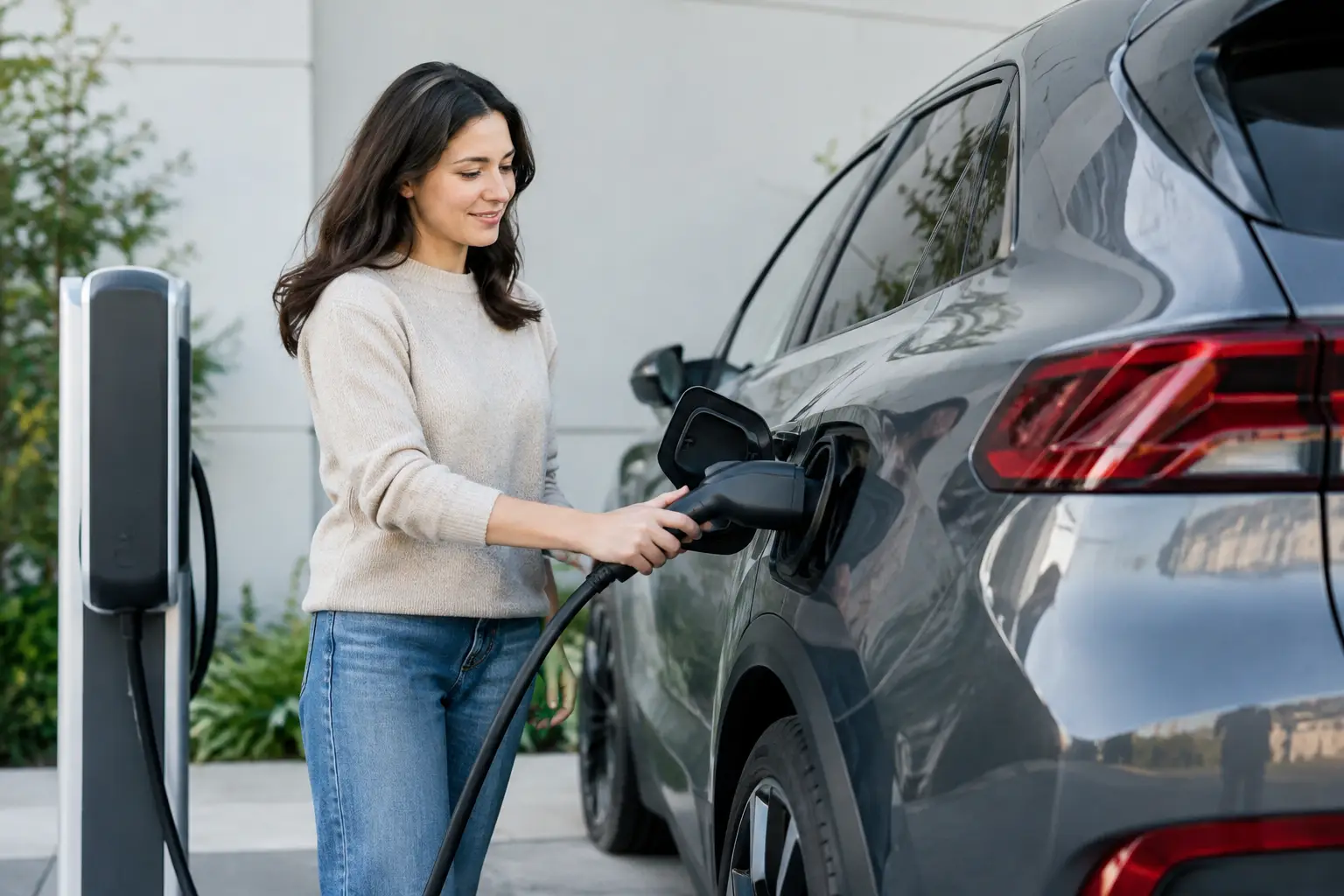
A used EV can look like a strong deal until you realize the charging setup does not fit your driveway, apartment, work route, or weekly miles. This electric vehicle charging guide focuses on the details that matter when you are comparing listings: how fast a vehicle charges, which connector it uses, what charging equipment costs, and what questions belong in your message to the seller.
Charging is not one feature. It is a combination of the vehicle's onboard hardware, battery condition, connector type, your access to electricity, and the stations available where you actually drive. A buyer who understands those pieces can compare EVs as confidently as mileage, title status, tires, or drivetrain.
Electric Vehicle Charging Guide: Start With Your Driving Pattern
Before looking at plugs or charging apps, calculate your normal use. A commuter driving 25 miles a day with a garage has very different needs from a rideshare driver, a rural buyer, or someone living in an apartment without assigned parking.
Most EV owners do not need to visit a fast charger every day. If you can charge at home or work, the vehicle can recover daily driving while it sits. Public fast charging matters most for long trips, high-mileage use, and drivers without dependable overnight charging.
Look at your realistic routine, not the occasional 400-mile road trip. Ask where the vehicle will park overnight, whether that location has a standard outlet or 240-volt service, and how often you drive beyond the vehicle's useful range. Cold weather, highway speed, steep grades, cargo, and towing can all reduce range. The range number on a listing is a starting point, not a promise.
Know the Three Main Charging Levels
Charging level tells you the type of power source and the general speed. The actual result still depends on the vehicle, battery temperature, state of charge, and station output.
Level 1: Standard 120-Volt Outlet
Level 1 uses an ordinary household outlet and the portable charging cord that often comes with the vehicle. It is the slowest option, usually adding roughly 3 to 5 miles of range per hour.
For a plug-in hybrid or a low-mileage driver, Level 1 may be enough. It can also work for a full EV if the car sits parked for long periods and daily miles are modest. The trade-off is recovery time. A nearly depleted battery may need several days, not one night, to recharge.
Do not treat every outlet as charging-ready. Older outlets, loose connections, overloaded circuits, extension cords, and outdoor outlets without proper protection can create problems. If you plan to rely on Level 1, have the outlet and circuit checked when there is any doubt.
Level 2: The Home-Charging Sweet Spot
Level 2 uses 240-volt power, similar to an electric dryer or range. It is the standard solution for homeowners who want dependable overnight charging. Depending on the EV and equipment, Level 2 commonly adds about 20 to 40 miles of range per hour.
A Level 2 unit is not automatically the same as a faster charge. The charger on the wall supplies available power, but the vehicle's onboard charger sets the limit for AC charging. A car that accepts 7.2 kW will not charge at 11.5 kW just because the wall unit is capable of it.
Installation cost varies widely. A simple install near the electrical panel can be manageable, while a long run of wiring, a panel upgrade, trenching, or permit requirements can raise the price quickly. Get an electrician's estimate before assuming a home charger is part of the deal.
DC Fast Charging: Fastest, but Not Always Cheapest
DC fast charging sends direct current to the battery and bypasses the vehicle's onboard AC charger. It is the option used on road trips and at many commercial charging locations. Charging power is measured in kilowatts, and stations can range from modest 50 kW units to 150 kW, 250 kW, or higher.
A station's maximum rating is not what every EV receives. A vehicle limited to 55 kW cannot pull 150 kW. Even a fast-charging EV may only hit its peak rate under the right conditions, usually with a warm battery and a low state of charge.
Fast charging also slows as the battery fills. On many EVs, charging from 10% to 80% is much quicker than going from 80% to 100%. That is why road-trip stops often make more sense at 15% to 25% remaining, followed by a charge to roughly 70% or 80%, rather than waiting for a full battery.
Connector Types and Compatibility
A charging station is only useful if the plug works with your vehicle. For US buyers, the most common AC connector on non-Tesla EVs has been J1772. DC fast charging has commonly used CCS1 on many domestic, European, and Korean models. Tesla's North American Charging Standard, known as NACS, is now used by Tesla and is being adopted across more new vehicles.
The transition makes connector details more complicated for used-EV shoppers. Some vehicles can use certain networks with an approved adapter, while others cannot. Availability can also change as automakers add access agreements and update vehicle software.
Before buying, verify the exact model year, connector, included adapters, and eligible charging networks. Do not rely on a seller saying the car "charges everywhere." Ask whether the vehicle has used DC fast charging successfully, whether an adapter is included, and whether any charging-related warning lights or error messages have appeared.
Charging Speed: Read the Numbers Correctly
Battery capacity is measured in kilowatt-hours, or kWh. Think of kWh as the size of the energy tank. Charging power is measured in kilowatts, or kW. Think of kW as the rate at which energy is flowing into that tank.
A 75-kWh battery does not necessarily take one hour to charge at a 75-kW station. Charging losses, the charging curve, battery temperature, and the vehicle's limits all affect the result. Still, these figures are useful for comparing listings.
For practical shopping, check three numbers: battery capacity, maximum Level 2 charging rate, and maximum DC fast-charge rate. A used EV with strong range but slow DC charging may be ideal for a home-based commuter and frustrating for frequent interstate travel. A vehicle with quick DC charging may justify a higher price for a driver who travels for work.
What Charging Costs Really Look Like
Home charging is usually the lowest-cost option because you pay your local electricity rate. Multiply the energy added by your rate per kWh, then allow a little extra for charging losses. For example, adding 60 kWh at $0.16 per kWh costs about $9.60 in electricity before losses.
Public charging prices vary by network, location, time of day, membership, and whether pricing is based on kWh or time. DC fast charging usually costs more than home charging. It can still be worth it when time matters, but relying on it for all charging can change the ownership math.
Some stations add idle fees when a vehicle remains plugged in after charging ends. That is not just a cost issue. Moving your vehicle promptly keeps shared stations available for other drivers, especially at busy travel stops.
Questions to Ask on a Used EV Listing
A clean exterior and an attractive asking price do not tell you whether the EV fits your charging plan. Treat charging equipment and battery information as part of the vehicle's condition disclosure.
Ask the seller for the current estimated range at a full charge, not just the original EPA rating. Request photos of the charging port and included cable or adapters. Confirm whether Level 1, Level 2, and DC fast charging all function properly if the vehicle supports them.
You should also ask about battery warranty coverage, open recalls, charging repairs, and any history of a damaged charge port. On rebuilt or salvage-title EVs, pay extra attention to high-voltage battery damage, charging-system repairs, warning lights, and whether repairs were performed by a qualified shop. A vehicle may drive normally on a short test drive while still carrying an expensive charging or battery issue.
If possible, see the vehicle charge before purchase. Watch the charge session begin, confirm that the port locks correctly, and check the dashboard for charging speed or fault messages. This is a practical inspection step, just like checking tire wear, air conditioning, cameras, title documents, and VIN details.
Set Up the Deal Before You Buy
The best charging plan is the one that matches the vehicle and your parking situation. A lower-priced EV with slower fast charging may be the better buy if you have reliable Level 2 charging at home. A newer model with broader fast-charging access may be worth more for a buyer who drives long distances or cannot charge where they live.
Bring your charging questions into the first conversation with the seller, not after paperwork is signed. On AutoDeal, clear messages and detailed listing details make it easier to compare real ownership costs before you make an offer.
A good EV purchase should leave room in the budget for the charging setup that makes the vehicle useful. Verify the plug, verify the speeds, and verify where tomorrow night's charge will come from.
 Romaian
 English
 French
 Spanish
 Portuguese
 Deutsch
 Turkish
 Dutch
 Italiano
 Russian
 Portuguese (Brazil)
 Greek
