


 Friendys
 United Ukraine
 Bidfax
 Pagamentos
 GenAp group chat
 Adsline MarketPlace
Buy a New Car vs Used Car: 5-Year Cost Breakdown
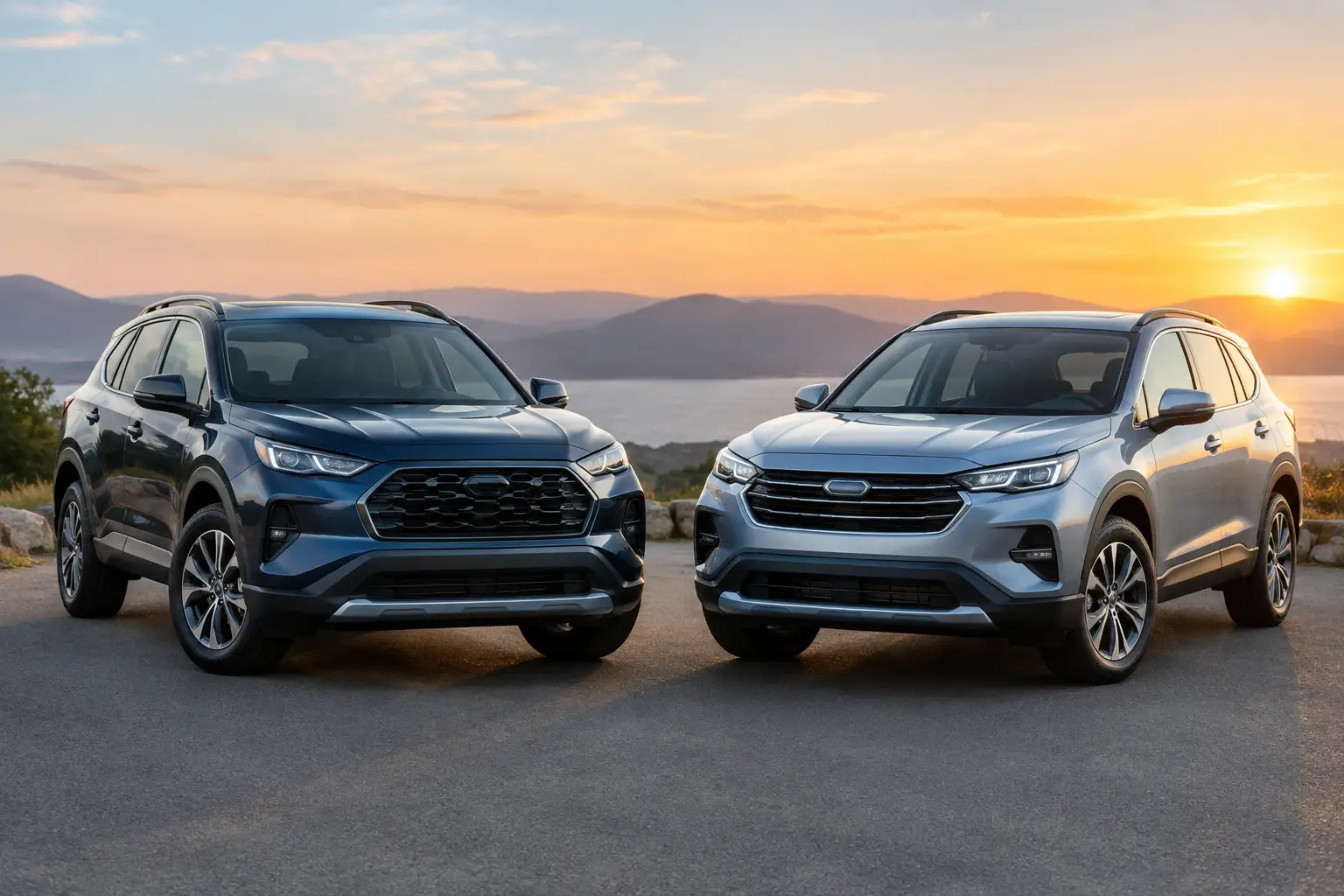
Buy a New Car vs Used Car: 5-Year Cost Breakdown
Key takeaways
- A 3-year-old used car usually wins on five-year total cost because the first owner absorbs the steepest depreciation.
- Sticker price and monthly payments mislead; only a line-item comparison of depreciation, financing, insurance, and maintenance settles the question.
- Used car loans carry higher rates, but the smaller loan balance often means less total interest than a new car loan.
- A new car makes sense mainly for long ownership horizons of ten years or more, or when a manufacturer offers 0% financing.
- Get insurance quotes on the exact year, model, and trim before deciding, since coverage costs can flip the calculator result.
The used car wins on total cost in most cases: a 3-year-old car at about $21,000 avoids the steepest depreciation and typically costs less to insure and finance than a $30,000 new one. This framework walks a line-item calculator through depreciation, insurance, financing, and maintenance over five years so you can compare the real totals, not just sticker prices.
When does buying a new car vs used car actually cost less over five years?
The short answer: a used car usually wins on total cost because the first owner eats the worst depreciation. A new car can win when low financing rates and a full warranty offset that loss. Neither sticker price nor monthly payment settles it. You have to run the line items.
The five-year cost stack, line by line
| Cost line | Favors new | Favors used |
|---|---|---|
| Depreciation | Yes, heavily | |
| Financing rate | Usually | |
| Insurance premium | Usually | |
| Maintenance and repairs | Warranty years | Depends on history |
| Registration and taxes | Usually |
Add each column up over 60 months, not per year. The used column wins most often on depreciation alone: iSeeCars found the average new car loses about 38.8% of its value in the first three years, according to its cars that hold their value study.
Why sticker price alone misleads both ways
A $25,000 used car and a $32,000 new car are not $7,000 apart over five years. The new car depreciates faster in dollars, but the used car may carry a higher interest rate and repair risk. Run the same five-year stack on both before deciding, then shop the winner locally on sites like AdsLine Classifieds, where private sellers list used cars and even parts like cameras and imaging gear for local pickup.
How does depreciation change the math for new vs used cars in the first three years?
A new car loses the biggest share of its value in years one through three, and the first owner eats that loss. Buy a 3-year-old used car instead and someone else has already paid it. That single fact drives more of the total-cost gap than sticker price does.
Worked example: $30,000 new vs $21,000 three-year-old
Say a model sells new for $30,000. A typical car can lose roughly 40% of its value in the first three years, so the same car at age three might list around $21,000. The first owner is out about $9,000, before counting anything else. If the used car loses another 25% over the next three years, that is roughly $5,250 of further depreciation. Over a five-year hold, the used buyer's depreciation bill is far smaller, and the savings can cover insurance, maintenance, or a chunk of financing. When you finish clearing out the garage and sell the old car, list it where local pickup buyers look, the same way you would post free ads for clothing and accessories.
When depreciation argues for new
New makes sense if you keep cars for ten years or more. The steep early loss gets spread across a long ownership, and you get the full first owner's warranty period. Buying new and trading in after three years is the most expensive habit in car ownership.
What does a used car vs new car calculator need to include to be accurate?
Sticker price tells you almost nothing. A useful calculator has eight inputs, and the two that move the answer most are depreciation and loan rate.
Field 1-3: price, down payment, loan rate
Enter the purchase price, your down payment in dollars, and the annual percentage rate on the loan. Used car loans typically carry higher rates than new car loans; Experian publishes the current averages for both in its quarterly State of the Automotive Finance Market report on Experian's automotive finance site, so pull the live numbers rather than guessing. A bigger down payment shrinks the interest total more than any other field.
Field 4-5: depreciation and resale value
Depreciation is where used cars win. A new car can lose a large share of its value in the first three years, while a three-year-old used car has already absorbed that drop. Estimate what each car sells for in year five and subtract it from what you paid. If you skip this field, the calculator flatters the new car.
Field 6-8: insurance, maintenance, fuel and fees
Add annual insurance quotes for each specific car, since coverage on a new model usually costs more. Then add expected maintenance, fuel based on your real mileage, and registration fees.
The five-year totals side by side
Sum purchase price minus resale value, plus loan interest, insurance, fuel, maintenance, and fees. Run both cars through the same fields and compare the totals, not the monthly payments. When you have picked the used car, browse local car and vehicle listings and run the same math on the asking price before you meet the seller.
How does insurance for a new car vs used car differ, and why?
A new car usually costs more to insure for one plain reason: it costs more to replace. Comprehensive and collision coverage pay out based on the car's value, so a $35,000 new car draws higher premiums than a $15,000 used one.
Gap insurance and lender requirements
If you finance a new car, the lender will require comprehensive and collision coverage, not just liability. That alone raises your bill. Add a loan longer than the car's depreciation curve and you may also need gap insurance, which covers the difference between what you owe and what the car is worth.
A used car bought for cash lets you carry liability only, the cheapest legal option. That is a real saving, though it means paying for any damage yourself.
How to price insurance before you sign
Get quotes on the exact year, model, and trim you are considering, for both new and used versions, before you commit. A $4,000 gap in five-year insurance cost can flip a calculator result on its own. Once you have settled the new vs used question, you can also sell your current car through a free listing on AdsLine and put the cash toward the down payment.
What financing and interest rate differences should you expect between new and used car loans?
Used car loans usually carry higher rates, but the principal is smaller, so the total interest can still favor used. Illustrative example: a $28,000 new car at 5.5% for five years costs about $4,060 in interest, while a $16,000 used car at 8.5% costs about $3,710. The rate gap is real, but the smaller balance absorbs it.
Rate vs principal: which matters more?
Run both numbers before you sign. A three-point rate difference matters less than a $12,000 difference in what you borrow. Your insurance obligations can also shift the math, since lenders require comprehensive and collision coverage either way, and gap insurance is often pushed on new-car loans. The Insurance Information Institute explains what standard auto policies cover if you need a refresher on coverage types.
When 0% or low APR new-car offers win
Manufacturer incentives can flip the result. A 0% five-year offer on the new car cuts interest to zero, which a used loan rarely matches. If you take that deal, skip the gap coverage only after confirming what your policy covers. Once you have settled the financing, posting your old car as a free classified ad as a cash sale locally keeps the transaction simple.
What do new vs used car discussions on Reddit get right and wrong?
What the consensus gets right
The most repeated advice is sound: a three-year-old car has already taken its steepest depreciation hit, so you let the first owner absorb that loss. Redditors also correctly point out that modern used cars, with fewer than 100,000 miles and a clean history report, are far more reliable than the used cars of decades past. Both points hold up in the calculator walkthrough earlier in this article.
Where the advice breaks down
Two common claims fall apart under line-item math. First, commenters often say used cars are always cheaper to finance, but used loan rates frequently run higher than new car rates, which can erase part of the sticker savings. Second, "used means cheap insurance" is not automatic; some models cost more to cover used than new. Run your specific quote before assuming.
Which buyer situations clearly favor used cars over new cars?
Some situations make the used side of the buy a new car vs used car decision almost automatic.
Short ownership horizons
If you plan to sell or trade within two or three years, depreciation hits you hardest on a new car. A three-year-old used car has already absorbed that steepest drop, so you lose less when you pass it on. The same logic applies if you expect your driving needs to change, such as a growing family or a job change.
Buying from a private seller vs a dealer lot
A private local seller has no showroom, no doc fees, and no add-ons to recover, so the price usually reflects the car rather than the overhead. Threads on r/whatcarshouldIbuy regularly recommend this route for first cars and tight budgets, with the caveat to budget for an independent inspection. High-mileage drivers benefit too, since the per-mile cost gap between new and used widens as annual mileage climbs.
Where should you buy and sell locally once you have decided?
Comparing local marketplaces for cars
Run every channel through the same three criteria: what it costs to list, how many local buyers see the car, and how contact happens. Craigslist has long been the default for local pickup deals, Facebook Marketplace puts your car in front of people you already sort of know, OfferUp is built around mobile buying and selling, and eBay leans toward auctions and out-of-area buyers. AdsLine lets you post free ads and handle contact through built-in secure messaging, so you are not handing out your phone number to strangers.
Selling your current car without a yard-sale-style hassle
A car is not a garage-sale item, but the same logic applies: skip the hassle, list it, meet in person for a cash deal. Post the car once, answer messages in one place, and arrange local pickup for test drives. The same listing works if you are bargain hunting for your next used car at the same time.
FAQ
Is it better to buy a new or used car with today's interest rates?
Usually used, because the smaller loan balance absorbs the higher rate. A used car loan often carries a rate several points above a new car loan, but borrowing thousands less can still mean less total interest. New cars win when a manufacturer offers 0% financing, which no used loan matches. Run both totals before signing.
How old of a used car is too old to buy?
There is no fixed age cutoff, but three years is the sweet spot because the steepest depreciation has already happened. Beyond roughly ten years or 100,000 miles, repair risk climbs and financing rates worsen. What matters more than age is the maintenance history, the mileage, and a clean vehicle history report. Budget for an independent inspection either way.
Does a used car really cost less to insure than a new one?
Usually, yes, because comprehensive and collision coverage pay out based on the car's value, and a used car is worth less to replace. But it is not automatic. Some models cost more to insure used than new, and a financed used car still requires full coverage. Get quotes on the exact year, model, and trim before assuming.
How much money do you actually save buying a 3-year-old car instead of new?
The biggest saving is depreciation. A $30,000 new car might list around $21,000 at age three, meaning the first owner absorbed roughly $9,000 of value loss. Add lower insurance premiums and a smaller loan balance, and the five-year total often favors used by thousands of dollars, though the exact figure depends on your rates and mileage.
Is it safe to buy a used car from a private seller locally?
Yes, if you take basic precautions. Private sales avoid dealer doc fees and add-ons, so the price usually reflects the car itself. Before handing over cash, pull the vehicle history report, pay for an independent inspection, meet in a public place, and verify the title matches the seller's ID. Handling contact through a platform's messaging keeps your phone number private.
 Portuguese
 English
 French
 Spanish
 Deutsch
 Turkish
 Dutch
 Italiano
 Russian
 Romaian
 Portuguese (Brazil)
 Greek
